
We get the same phone call almost every week. Someone’s on the other end, dog whining in the background, trying to describe what’s wrong while also trying not to fall apart. “He’s breathing funny.” “She won’t get up.” “I don’t know if this is a big deal or not.” Half the time it’s nothing serious. The other half, those few extra minutes of “let’s just wait and see,” are the ones that end up mattering most.
So let’s talk about it plainly—what’s actually an emergency, what usually isn’t, and why so many people around here end up typing emergency dog hospital near me into their phone at the worst possible hour of the night.
Dogs Are Terrible at Telling You Something’s Wrong
Not because they’re tough or brave—we just like to tell ourselves that. It’s older than that. In the wild, showing weakness got you picked off, so hiding pain is baked in. A dog that’s a little quieter than usual, eating slower, skipping the stairs—that’s not nothing. Often that’s the tail end of something that’s already been brewing for a couple of days. By the time it’s obvious to you, you’re usually well past the “let’s just keep an eye on him” window.
What Actually Brings Dogs Through Our Doors
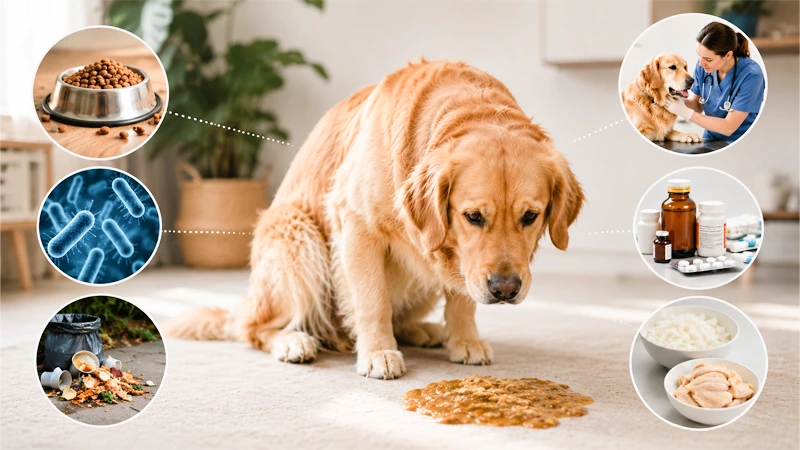
Honestly, it’s rarely the dramatic stuff you’d picture. Garbage raids. Compost bins. A Lab who got into half a bag of grapes off the counter, and nobody realized until the vomiting started. Chocolate calls come in constantly, and here’s what most people don’t know — it’s not really about “chocolate” as a category, it’s about how dark it is and how much your dog weighs. A 10kg dog eating a square of baking chocolate is a completely different situation than a 30kg dog getting into a couple of Hershey’s kisses.
It used to just be gum, now it’s in peanut butter, protein bars, even some toothpaste. A dog can go from totally fine to dangerously low blood sugar in under an hour after getting into the wrong jar.
Summer brings heatstroke, obviously—cars heat up faster than most people realize, past 40°C inside within minutes even with a cracked window. And bloat shows up disproportionately in big, deep-chested breeds—Great Danes, German Shepherds, and Weimaraners—especially the ones who inhale their food and then go straight into a run.
Signs That Mean Drop Everything
I’ll keep this part blunt, because blunt is what actually helps someone at 1am searching for an emergency vet near me with a scared dog in the back seat.
- Breathing that’s off. Fast panting while resting, wheezing, gasping. Could be heatstroke, an allergic reaction, something lodged in the throat, or a heart problem. Doesn’t matter which one — it means go now.
- A belly that looks swollen and feels tight, especially with retching and nothing coming up. That’s the classic bloat picture, and it can turn fatal within hours, not days.
- Vomiting or diarrhea that won’t stop, especially with blood in it. One episode is probably fine. Three in an afternoon — particularly in a puppy or an older dog — and dehydration risk climbs fast.
- Collapsing, or suddenly not walking right. This one scares people the most, and it should. It can point to internal bleeding, a sugar crash, or poisoning.
- Seizures lasting more than two or three minutes, or more than one in a single day. Don’t try to wait this one out.
- Any real trauma—hit by a car, a bad fall, a scrap with another dog at the park — even if your dog seems okay right after. Internal bleeding sometimes doesn’t show itself for a full day.
- Eating something toxic. Chocolate, xylitol, grapes, certain lilies, rat poison, ibuprofen off the nightstand. Call first—don’t wait around for symptoms to confirm your fear.
- Straining to pee, or not peeing at all. People underestimate this one. In male dogs especially, it can mean a blockage, and that turns dangerous within a day or two.
- Gums that are pale, white, or bluish instead of pink. Press one with your finger — it should snap back pink within about two seconds. If it doesn’t, something’s off with circulation.
The Ones People Talk Themselves Out Of
A limp that came out of nowhere—especially one that’s worse after resting rather than better—isn’t always “just a strain.” It could be a fracture, a torn ligament, or sometimes a joint infection. A dog that’s stopped drinking (not just eating) dehydrates faster than most people expect, sometimes within a day in smaller breeds. Drooling combined with pawing at the mouth often means something’s physically stuck—a stick fragment, a bone shard wedged somewhere it shouldn’t be. And a dog that seems briefly wobbly, tilts their head, and won’t stop, or has one pupil noticeably bigger than the other—that’s neurological, and it doesn’t always announce itself as an emergency even when it is one.
Before You’re Even in the Car
Stay steady. Your dog reads your energy far more than your words, and a frantic owner tends to make a scared dog worse. If a broken bone or spinal injury seems possible, keep movement minimal—a towel works as a makeshift sling for smaller dogs in a pinch. No food, no water, no medication unless someone on the phone has specifically told you it’s fine. If it’s a seizure, clear the space around your dog but don’t hold them down or put anything near their mouth. And call ahead whenever you can—it genuinely changes how fast a team can move the moment you walk through the door, whether you’re already registered with Guardian Animal Hospital or you found the nearest emergency dog hospital near me in a panic five minutes ago.
What Happens Once You Get Here
Dogs in visible distress get seen first — same principle as a human ER. Vitals come first: heart rate, breathing, temperature, and gum color. Then come the questions—when did this start, what did they eat, any existing conditions, and current medications. Having a rough timeline in your head before you arrive genuinely saves time. Depending on what we’re dealing with, bloodwork, X-ray, or ultrasound might follow, and costs vary quite a bit — anywhere from a few hundred dollars for basic diagnostics up to several thousand if surgery becomes necessary. Better to know that going in than be blindsided mid-crisis.
Why the Closest Option Usually Wins
Every minute spent driving is a minute the problem gets to keep progressing. That’s really the whole reason so many people end up searching “emergency dog hospital near me” instead of driving toward some hospital they vaguely remember from a Google ad years back. With bloat specifically, the data is pretty clear—survival odds drop the longer treatment gets delayed. Ten minutes versus twenty-five isn’t a rounding error; it can be the difference that matters.
Already knowing an animal hospital in Surrey that you trust cuts out a layer of chaos you don’t need on a bad night. You’re not white-knuckling an unfamiliar route while trying to keep a dog calm in the back seat. Some people specifically look for an animal hospital in South Surrey just for the shorter drive, while others simply want to know which vets in Surrey are actually equipped for genuine emergencies, not just nine-to-five checkups.
Do This on a Boring Tuesday, Not During the Crisis
Pick a hospital before you actually need one. A clinic that already has your dog’s weight, history, allergies, and medications on file moves faster than one meeting your dog for the first time under pressure. Save the number for your emergency vet near me the same way you’d save your own doctor’s line. And this is also a good time to get routine care sorted while things are calm — cat immunizations, canine vaccinations and general wellness checks with a vet veterinarian you trust all matters more than people give them credit for. If your dog has something ongoing—a heart murmur, a history of pancreatitis, whatever it is—mention it during a regular visit so it’s already on record long before it ever becomes urgent.
After the Emergency’s Over
Getting through the visit is genuinely only half the job. Most dogs need somewhere between three and seven days of taking it easy afterward, even if they seem back to normal within hours. Stick to whatever feeding plan you’re given—plain boiled chicken and rice is common after GI trouble, with smaller, more frequent meals if that’s the advice. Keep a close eye during the first two to three days especially, since that’s when relapses tend to show up. If something feels off again, even something small, call. Don’t just hope it passes on its own.
A good South Surrey vet hospital will usually let you set this groundwork up in a single routine visit, which makes the difference enormous if a real emergency ever hits.
Your Gut Is Usually Right
You know your dog better than any list ever could. If something feels wrong and you can’t quite explain why, that’s reason enough to get it checked. Nobody on our team has ever been annoyed that a dog turned out fine. The scenario that actually hurts is the one where someone waited too long, hoping it would resolve by itself.
Conclusion
Nobody wants a middle-of-the-night trip to the vet. But knowing the real warning signs, understanding what usually causes them, and having a plan already sitting in your back pocket turns a genuinely scary night into something you can actually handle. Keep the number for an emergency dog hospital near me somewhere you’ll find fast, learn which symptoms mean go now instead of wait it out, and trust the part of you that already knows something’s wrong. Your dog can’t say it out loud. Paying attention is usually the whole job.
FAQs
How do I know it’s a real emergency and not just a rough day?
Breathing trouble, collapse, a swollen belly, heavy bleeding, or a dog that seems completely out of it — act on those immediately and get to an emergency dog hospital near me without waiting it out. Not sure? Call and describe what you’re seeing; that alone usually clears things up.
What should I actually bring with me?
Any meds your dog’s currently on, a rough idea of when this started, and the packaging of whatever they ate, if that’s what’s going on.
Does calling ahead even matter?
Yes. It gives the team time to get a space ready and gives you real guidance for the drive over — especially useful with something time-sensitive like bloat.
Why does emergency care cost more?
Urgent diagnostics, after-hours staffing, and sometimes surgery. A few hundred dollars for bloodwork, several thousand if surgery’s involved. Worth knowing upfront rather than finding out mid-crisis.
What if I can’t tell whether it’s serious?
Call anyway. Saying it out loud to someone who knows what to listen for is faster than guessing alone at midnight.
How fast can bloat turn dangerous?
Two to six hours in bad cases. It’s one of the few things where waiting even a little too long changes the outcome.
Should I try home treatment first?
Not for anything on the serious list above. It usually just delays real treatment and makes things harder to diagnose once you do get here.
Are puppies and older dogs more at risk?
Generally, yes. Puppies crash faster with dehydration and low blood sugar, and older dogs are more likely to have something underlying — like heart disease or tumors — complicating what looks simple on the surface.